
NTSB begins debris hunt for crashed Learjet after heavy Florida rains
Investigators are collecting scattered wreckage while searching for the cockpit voice recorder to determine why the plane broke apart before impact.
By Elena Castillo ·
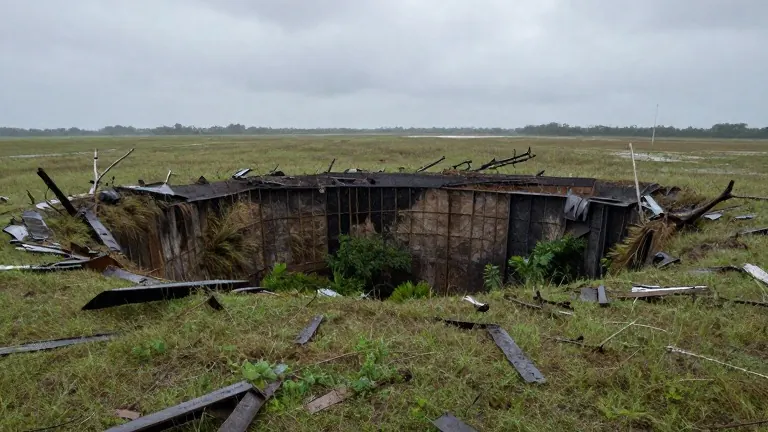
The National Transportation Safety Board has begun a detailed investigation into the crash of a Learjet in Florida that killed all nine people aboard. The business jet was bound for the Bahamas when it encountered a thunderstorm and slammed into the ground with enough force to create a crater.
Investigators spent Tuesday gathering physical evidence from the crash site. They located pieces of the aircraft's tail elevator, a component that controls pitch, more than one mile away from the main crater. This discovery confirms the plane began breaking apart in the air before it hit the ground.
NTSB member Tom Chapman said the team is actively searching for the cockpit voice recorder. He described the device as very important data that could reveal what the pilots said to each other during the encounter with turbulence and ice. Chapman noted that even if the recorder is not found, investigators can still use their expertise to determine how the events transpired.
Weather conditions have complicated the early stages of the search. Torrential rains over the past week filled the crater with water, potentially hiding parts of the wreckage. Investigators also had to remove a utility pole from the site. The NTSB has asked members of the public to report any plane parts they find so the team can collect them.
Retired airline pilot John Cox examined the flight data and expressed confusion about the pilots' decision to descend. The aircraft was cruising at 41,000 feet when it approached the storms. Cox said he would prefer to stay at that altitude to have a better view of the weather. He noted that the pilots steered around a larger storm cell but appeared to head directly into a smaller, rapidly developing one.
The co-pilot radioed air traffic controllers that the plane was being thrown up and down more than 700 feet. She requested a better route through the area. It is not yet clear why the pilots did not fly around the storms. Investigators will review the plane's weather radar and check whether the pilots consulted other weather services.
The NTSB expects to publish a preliminary report about 30 days after the crash. This document will list the known facts but will not yet identify the cause. A final report identifying probable causes usually takes 12 to 18 months to complete. The agency's roughly 400 workers are currently managing more than 1,200 active investigations.
Experts will work with the National Weather Service and the Federal Aviation Administration to understand what the plane encountered at approximately 35,000 feet. The team will also review maintenance records and interview officials from Upper Jets, the company that operated the flight. Bystander videos and surveillance footage will be analyzed for additional clues about the final moments of the flight.
More News · Indianapolis news · Report a business · Got a Story?