30 Events in 30 Days: Trump's Midterm Campaign Strategy
President Trump held 30 campaign events in the month before the election, but Democrats gained control of both houses of Congress as voters focused on economic costs.
By Jisoo Kim ·

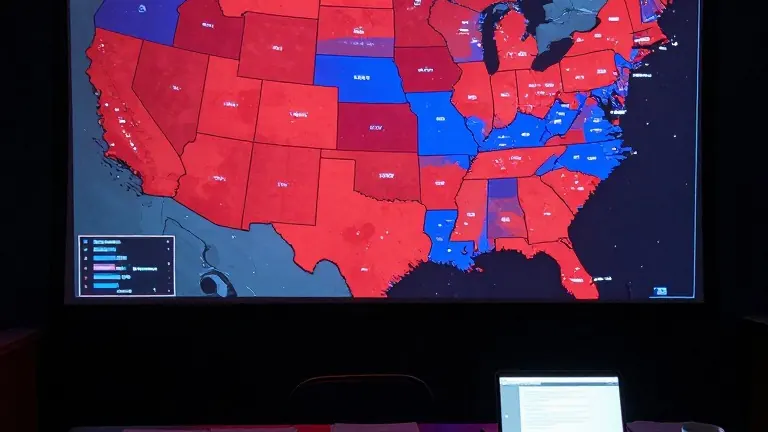
President Donald Trump held 30 campaign events in the 30 days leading up to the midterm election. He made himself the central figure in the race, telling supporters to vote as if he were on the ballot. The strategy aimed to increase turnout among Republican voters, a group that historically has lower participation rates in midterm cycles. Despite the high volume of events, Democrats swept the key races for control of Congress.
The first reason the strategy fell short involved the specific messages Trump delivered. Franco Ordoñez, a White House correspondent, noted that Trump’s final speech the day before the election focused heavily on renovations to the reflecting pool at the National Mall. He discussed algae blooms and improvements to the surrounding grass. Ordoñez said that while Washington, D.C., improvements are one thing, voters across the country were concerned with different priorities. The reflecting pool was not a top issue for the electorate.
The second factor was the economic environment. Trump’s economic agenda did not produce the results he promised to voters. Tariffs increased the cost of imported goods, and the war in Iran caused gas and diesel prices to rise sharply. Trump acknowledged to The Wall Street Journal that the conflict in Iran contributed to voter dissatisfaction. He also defended his decision-making regarding the war. These economic pressures, combined with concerns about immigration and labor force changes, influenced the shift in voting patterns.
The third element involved the demographic changes in voter support. Early exit polls showed a significant shift among groups that supported Trump in the 2024 election. Young people and Latino voters moved away from his party in large numbers. This demographic shift was evident in states like Texas and South Carolina. Both states have not elected a Democratic senator in decades, yet the results moved in that direction this time. Trump defended his choices of candidates, including Ken Paxton in Texas and Darline Graham in South Carolina, arguing they were loyal to him.
Context reveals that the election served as a referendum on Trump’s leadership. He had previously chased out popular incumbent Thom Tillis from the North Carolina Senate race. Tillis was replaced by Michael Whatley, a move that altered the dynamics of that race. After the results came in, Trump posted a picture of a red MAGA hat with the text Mr. Veto. He also stated he was ready to make deals with the new Democratic leadership. The White House simultaneously posted an image on Instagram asserting that Trump is still the president. The Republican Party now faces the challenge of defining its direction without Trump at the center, a question that will become clearer in the 2028 presidential election.
More Politics · Indianapolis news · Report a business · Got a Story?