200 farmers adopt bylaws for new barley group
Leaders elected at Grand Forks Armory as the National Malting Barley Growers Association launches operations.
By Tristan Parker ·
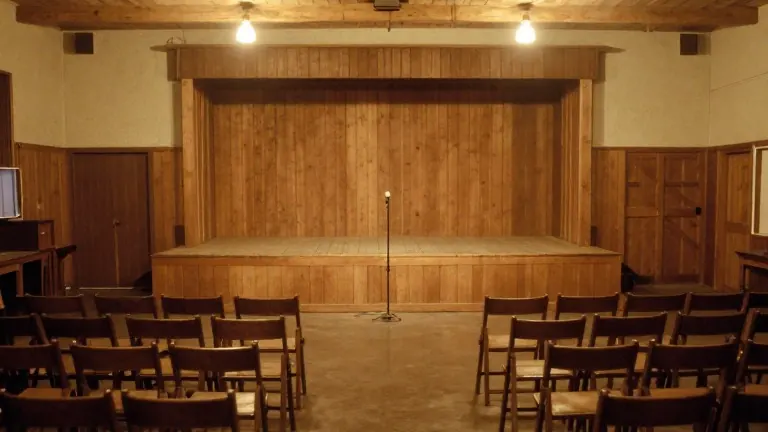
The National Malting Barley Growers Association formalized its existence on Wednesday by adopting a constitution and bylaws at the Grand Forks Armory. The event marked the first annual convention for the newly established farm commodity organization. More than 200 farmers attended the gathering, representing 17 counties in North Dakota and Minnesota.
The group was led into existence by a 17-member steering committee that operated for slightly over a year. That committee transformed the organization from a conceptual idea into a unit with 1,400 members. Separate county organizations were established throughout the Red River Valley during that period.
F. O. Ottem of Osnabrock, North Dakota, was elected president by county directors in a meeting held just before the main session. George C. Howe Jr. of Casselton, North Dakota, was elected vice president. Elmer Bredlie of Eldred, Minnesota, was named secretary-treasurer.
Ottem had previously chaired the steering committee. The committee included individuals from towns such as Drayton, Minto, Hatton, Lakota, Finley, Mooreton, Crary, Bisbee, Hallock, Stephen, Sabin, Halstad, and Rothsay.
The morning program featured economic predictions for the industry. George Wilkens, executive vice president of the Minneapolis Grain Exchange, forecast increased profits for growers over the next five years. He attributed this outlook to two specific logistical changes.
Wilkens identified the switch from boxcars to hopper-style railroad cars for grain shipment as the first driver of profit growth. He noted that hopper cars carry nearly twice the capacity of boxcars and can be unloaded in a matter of minutes.
The second factor is the widespread adoption of automatic sampling devices. Wilkens stated these tools will establish a sampling standard acceptable to growers, buyers, and other stakeholders in the commodity market.
Lars Jensen, a North Dakota State extension agronomist, addressed the group on the impact of specific barley varieties. He reported that Trophy and Larker barley, developed at NDSU in recent years, added $10,000 to farm income in the production regions of North Dakota and Minnesota.
Jensen stated that approximately 60 percent of North Dakota barley acreage in 1963 was planted with Trophy or Larker varieties. He calculated that per-acre yield improvements and quality gains accounted for $5,000 in additional income each.
Billy Martin, a former New York Yankees baseball player and sales promotion agent for the Minneapolis Brewing Company, addressed the farmers. He thanked the growers on behalf of the beer industry for improving the quality of malting barley. Martin also shared stories from his life in professional baseball.
Irven Hagen, assistant director of the State Seed Department in Fargo, spoke on grading and federal standards affecting the growers. Mike Sfat, president of Rahr Bio-technical Laboratory in Manitowoc, Wisconsin, presented on the malting process.
Robert W. Dibble, manager of sales operations research for International Harvester Company in Chicago, delivered the banquet address. His topic was "The Challenge of Change." Dibble argued that more agricultural progress occurred in the previous 50 years than from the year 1 A.D. to the start of that period. He projected the next 25 years could be even more productive. He suggested that current productivity might not be sufficient to "feed everybody breakfast" in future years with larger populations. He also posited that people might actively farm ocean areas in the coming decades. Dibble stated he preferred a 5 percent surplus of farm products over a 5 percent deficit.
More Business · Business Complaints · Report a business · Got a Story?