Trump Ends Methane Restrictions to Boost Central Indiana Drilling
The administration's move removes federal rules that aimed to cut oil and gas emissions, a shift that could impact energy costs and local operations.
By Tristan Parker ·
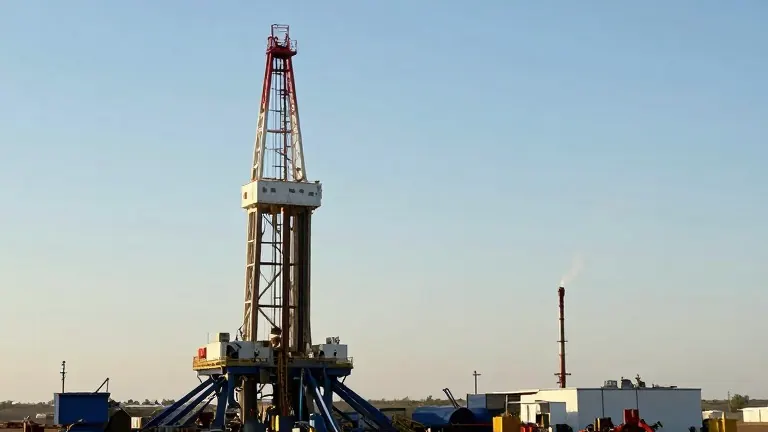
President Donald Trump announced on Tuesday that his administration is terminating the methane emission rules established during the Biden administration. The change targets the oil and gas sector, specifically aiming to reduce regulatory burdens on drilling operations across the country, including those in Central Indiana.
During a campaign rally in Lubbock, Texas, Trump stated that the new policy would save companies and consumers an estimated $45 billion in costs. He added that the move would unlock 210 million barrels of oil, a volume he described as equivalent to roughly 10 days of total U.S. petroleum consumption. The White House frames this adjustment as a direct response to high fuel prices and ongoing conflicts in the Middle East.
The terminated rule, originally published in 2024, was designed to prevent approximately 58 million tons of methane emissions by 2038. Methane is a potent greenhouse gas that traps heat in the atmosphere more effectively than carbon dioxide over short periods. Scientists estimate that methane accounts for about one-third of total planet-warming greenhouse gas emissions, making its reduction a central focus of global climate efforts.
EPA Administrator Lee Zeldin previewed the policy shift last month, noting that the agency would eliminate the Super Emitter Program. This program previously required oil and natural gas companies to investigate and repair major methane leaks. Under the new guidelines, the EPA will also set less restrictive standards for small oil and gas wells, a segment of the industry that Trump said was crushed by the previous regulations.
The final rule under the previous administration applied to both new and existing wells, expanding the scope of previous regulations that only covered new construction. It also required operators to plug leaking methane from smaller wells. These smaller wells produce only 6% of the nation's oil and gas but are responsible for up to half of all methane emissions from oil and gas fields. The rule was coordinated with a waste emissions charge of up to $1,500 per metric ton, a fee that Congress repealed shortly after Trump took office.
Environmental groups have criticized the rollback, arguing that it allows companies to continue releasing gas that could be captured and used to power homes. Fred Krupp, president of the Environmental Defense Fund, said the decision gives companies a free pass at the expense of American consumers. He noted that the EPA should be fighting waste rather than making it easier for producers to ignore leaks. Zeldin countered that the rule would have cost $18 billion and hindered the growth of the U.S. energy industry.
The move is part of a wider effort by the current administration to dismantle climate policies enacted in recent years. Other recent actions include revoking key scientific findings on greenhouse gases, lowering fuel economy standards for vehicles, and repealing emission restrictions for coal and natural gas power plants. The administration argues that these steps are necessary to lower energy prices and strengthen domestic production capabilities.
The Biden-era rule was initially announced in 2023 at a United Nations climate conference in the United Arab Emirates. It was projected to yield $98 billion in benefits by 2034, a figure based on the social costs of emissions to public health and the environment. The EPA under Trump has rejected this approach to calculating benefits, favoring direct cost savings for energy producers and consumers instead.
Source: WBAA · original report published
More Business · Indianapolis news · Business Complaints · Report a business · Got a Story?