Central Arizona Project Faces 47% Water Cut as Old Warnings Return
A new federal plan threatens to slash water allocations for the 336-mile canal system that serves Phoenix and Tucson, a crisis designers predicted in the 1960s.
By Jisoo Kim ·
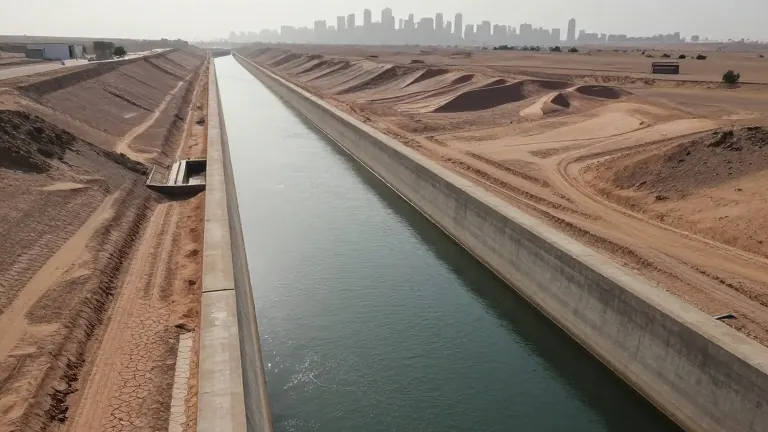
A new federal plan for cutting back water use in the Colorado River could reduce the water allocated to the Central Arizona Project by 47 percent. The proposal triggered legal action from Arizona, Nevada, and the canal system that delivers water to the Phoenix area. This move places the future of the 336-mile infrastructure project, which serves nearly 40 million people across seven states, in direct jeopardy.
The Central Arizona Project, or CAP, is a network of canals, pipelines, and pumping plants built to bring water to central Arizona. Rich Weissinger, a former director of field maintenance for the CAP, described the system as an engineering marvel. He noted that the facility relies on steady, reliable sources to support local industry, municipalities, and residents. However, record-breaking drought and high water demand have shrunk the nation’s two-largest reservoirs to historic lows, straining the system's capacity.
The crisis was foreseen by the project's original architects. In the 1960s, policymakers warned that the CAP would face lower flows in the 21st century. Floyd Dominy, then commissioner of the Bureau of Reclamation, forecasted that available water supplies would be more than halved between 1990 and 2030. He predicted this decline due to growing water use in upstream states such as Colorado, New Mexico, Utah, and Wyoming.
Proponents also advocated for augmentation, a plan to add outside water sources to the Colorado River. Congressman Mo Udall argued that the project required additional water to remain viable. He suggested connecting the Colorado River system to the Columbia River in the Pacific Northwest or building desalination facilities on the Pacific Coast. Despite these proposals, none were implemented. Senators from the Pacific Northwest added language to the CAP legislation that barred the federal government from studying a Columbia River connection for ten years after the law passed.
Tom McCann, a former deputy general manager for the CAP, stated that the warnings were largely forgotten. He explained that cost and political hurdles prevented the implementation of the augmentation plans. The project has operated without the major infusions of desalinated or imported water that its designers recommended. McCann noted that while managers continued to study these options, they found them challenging in multiple aspects.
Brad Udall, a senior water and climate research scientist at Colorado State University and son of Mo Udall, said his father and uncle could have proposed simpler fixes. He argued that the 1960s mindset favored engineering solutions to every crisis. The brothers wanted to move the massive project forward quickly after a long legal battle with California. They hoped to address the complex water issues later, a strategy Brad Udall described as kicking the can down the road.
Chuck Podolak, former director of the Water Infrastructure Finance Authority of Arizona, suggested that the push for augmentation helped avoid a difficult political conversation. He noted that farms and ranches account for roughly three-quarters of all Colorado River water use. Podolak argued that it is more affordable for cities to buy water from farms than to build massive new infrastructure. The new federal plan now forces a decision on how to manage the river's dwindling supplies.
Source: WBAA · original report published
More News · Indianapolis news · Report a business · Got a Story?