Listeners Ask What Is Real in Music as AI and Fake Fan Claims Spread
New indie bands are pushing raw sounds while reports of manipulated metrics and counterfeit records raise questions about who made the music and who is listening.
By Elena Castillo ·
Reports of manufactured fans, counterfeit vinyl, and artists using artificial intelligence have pushed a recurring question to the front of music discussion in 2026. Caspian Hollywell of the New Orleans rock band Twisted Teens puts the question plainly in his song "Is it real?" Speaking to an interviewer, he said, "You can like us or you can hate us, but you can't say we're not real."
That question has surfaced repeatedly this year. Accounts have described emerging stars connected to plagiarism or nepotism, viral chart results that were rigged, and faked musical identities. The Rolling Stones used de-aging effects in a video. Reports have also noted counterfeit vinyl records. Mainstream pop continues to fill stadiums and streaming playlists, though discussion about the music itself has focused on questions of how it was made.
Several new bands have answered with direct, unpolished recordings. Twisted Teens and Westside Cowboy play a garage rock sound rooted in punk. Mandy Indiana works in noise rock, underscores creates self-dismantling hyperpop, and GENA plays jazz-funk. These groups have drawn attention this year while questions about artificial intelligence in music production continue. Hollywell has used several stage names during his career, including CPN, C-Bird, and Cas P. Ian. He has also spelled his last name Holywell and Halliwell.
Concerns about altered sound are older than the current technology. Ry Cooder recorded "Bop Till You Drop" in 1979, and the album became the first from a major label artist made with a computerized system. The recording captured notes more cleanly than analog tape. Cooder later said that transferring the master to disc produced sound he called "thin" and "cold."
A decade later, the singer Yvette Marine said her guide vocal was blended with Paula Abdul's voice to create the singing on the 1988 hit "Opposites Attract." Marine sued over the credits and lost the case. In The New York Times, critic Simon Reynolds described Abdul's music as "louder than life but lacking in resonance."
Questions about real performances have appeared since the early days of recording technology. In 1929, Volney D. Hurd wrote in the Christian Science Monitor that radio offered a "true miniature of the event," though he told listeners to attend live shows when they could. Washington Post critic William C. Woods reviewed the album and film of the Woodstock festival in 1970 and called both "a treasure and a fraud." Hugh Barker and Yuval Taylor set out three tests in their 2007 book "Faking It": representational authenticity, which asks whether an artist performed or composed a work bearing their name; cultural authenticity, which requires ties to specific communities; and personal authenticity, which asks whether a confessional song comes from the artist's own experience.
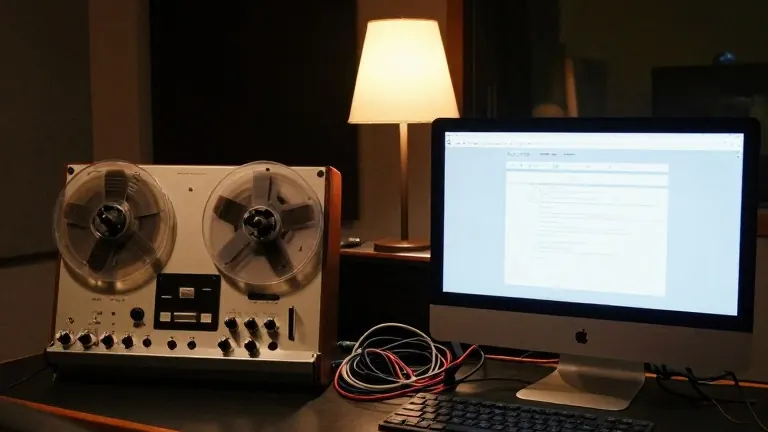
Listeners have accepted new tools in the past. Donna Summer's work with producer Giorgio Moroder on "Love To Love You Baby" used synthesizers, and The Monkees did not always play their instruments in the studio. The ABBA Voyage show in London has used holograms since 2022. In 1947, Bing Crosby broadcast a radio show from reel-to-reel tape while he played golf.
Source: WBAA · original report published