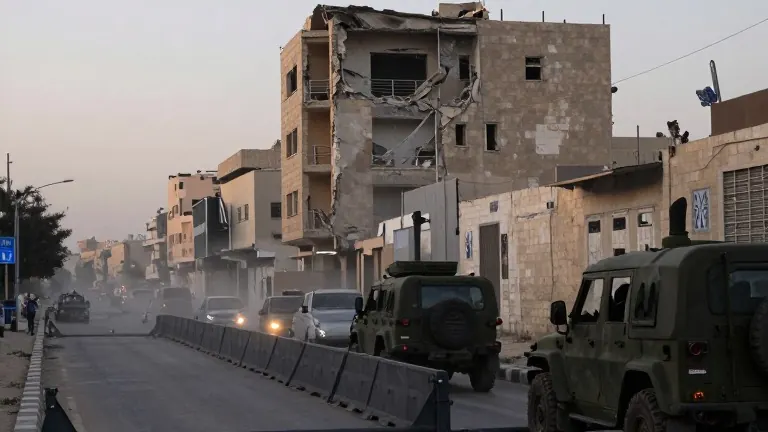
El-Fasher Residents Face 6,000 Dead in Three Days as RSF Marks One Year
Survivors report continued detentions and ransoms a year after the Rapid Support Forces captured the North Darfur capital.
By Elena Castillo ·
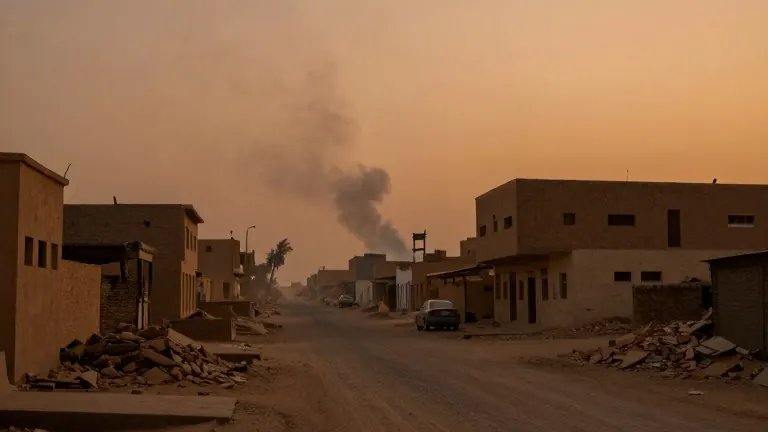
At least 6,000 people died in the first 72 hours after the Rapid Support Forces launched its final offensive on October 26, 2025. Monitoring groups used satellite imagery to count the dead. This figure marks the beginning of what researchers at Yale's Humanitarian Research Lab compared to the Rwandan genocide in speed and scale.
Hala, a survivor who uses a pseudonym for security, returned to el-Fasher three weeks ago from the Tawila refugee camp. She went to collect her birth certificate and ID. RSF fighters issued her a handwritten entry permit upon her arrival. The following day, soldiers spoke to her in the street using abusive language. Hala said she was spared physical attack only because other civilians were present. She told the campaign group Avaaz that there is no security in el-Fasher at all.
The city remains under a communications blackout, and the RSF has barred human rights investigators. Researchers identified 150 clusters of objects consistent with human remains between October 26 and November 28, 2025. Twenty of these clusters showed signs of burning. Fifty-seven clusters vanished entirely within four weeks. In the nearby town of Bara, volunteers have recovered more than 600 bodies from 200 mass graves, most of which witnesses say were killed during the same October offensive.
Displacement continues to strain the region. Tawila now hosts approximately 800,000 people, most from el-Fasher. Survivors say the RSF still detains fleeing men and demands ransoms of up to $3,000. Khadijah, an elderly woman from el-Geneina, lives under a tree on a farm with little food. Mudathir Mohammed Diqourni of an el-Fasher resistance committee stated that RSF militias are destroying farms and killing farmers in South and Central Darfur.
The siege lasted more than 500 days before the final assault. A doctor who worked inside an el-Fasher hospital for two years reported that generators ran only two hours a night. Emergency surgery was performed by phone flashlight. The World Food Programme reported that residents survived on animal fodder. A UN fact-finding mission concluded in February that the RSF committed acts of genocide. Mona Rishmawi, a member of the mission, said private companies in the UAE routed weapons through Chad, Libya, and Somalia.
The UAE continues to deny involvement despite accusations of backing the RSF. The United States remains the top weapons supplier to the UAE. British weaponry has been found on Sudanese battlefields. Mohamed Hamdan Dagalo, known as Hemedti, announced an investigation into violations by his soldiers. When a UN team entered el-Fasher under close supervision in December, it described the city as a crime scene.
Source: Middle East Eye