Detroit automakers face $2 billion cost hike from tariffs and diesel
General Motors and Ford expect input costs to rise significantly this year, while EV sales shift toward hybrids.
By Tristan Parker ·
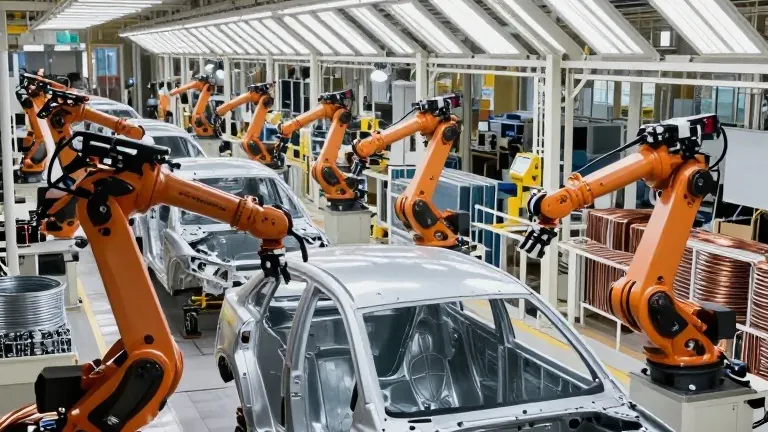
General Motors forecasts that the cost of materials, including computer chips and diesel, will run the company as much as $2 billion this year. Ford expects a similar year-over-year headwind of about $2 billion from commodities, memory, and logistics costs. These rising expenses are offsetting revenue gains reported by the Detroit Three in their third-quarter earnings calls.
General Motors reported its revenue was up 2.9% in the past year, while Ford saw a 2% rise and Stellantis reported a 1% increase. Light-duty truck sales led the growth, with GM truck sales rising 9% and Stellantis pickup sales in the U.S. increasing by 34%. Ford's F-Series continues to be a bestseller. The average new vehicle transaction price was just over $50,000 in September, near a record high, according to Kelley Blue Book.
Sherry Ann House, Ford's chief financial officer, stated that customers have been resilient amid higher fuel prices, interest rates, and inflation. However, Paul Jacobson, GM's chief financial officer, warned that sustained high prices for key materials make the path to next year more challenging. Stellantis CEO Antonio Filosa described higher prices for memory chips and raw materials as an industry-wide phenomenon to manage.
The cost increases stem from tariffs on imported steel, aluminum, and copper, alongside tight supply chains for computer memory chips. Diesel fuel costs are also impacting logistics. The average price for a gallon of diesel has hovered around $6.35, just below its September all-time high, according to AAA. This fuel cost affects trucking for parts moving between U.S. and Canadian factories and for shipping vehicles to dealerships.
GM is also paying about $2.5 billion in tariff costs this year, a figure lowered from earlier forecasts due to tariff refunds. Ford executives noted that growth in software services and parts is helping offset these rising input costs. Stellantis executives said they would provide more detailed information about these costs in the fourth quarter.
The end of the $7,500 federal tax credit for electric vehicles on September 30, 2025, has altered the EV market. GM reported its third-quarter sales were down 6% overall, partly due to a smaller EV market. Jacobson said GM is right-sizing its capacity and aligning production with demand. Ford did not address EV sales directly but highlighted the Fathom, an electric truck planned for pre-order in early 2027 at a price under $30,000.
EV sales in the U.S. have leveled out after an initial drop following the tax credit's removal, now representing about 6% of new car sales as of September, according to Edmunds. Hybrid sales have risen 27% in the past year as shoppers respond to high fuel prices. Sam Fiorani, a vice president for Auto Forecast Solutions, said the Detroit Three will likely offer more hybrid vehicles in coming years because the transition to fully electric vehicles is taking longer than anticipated.
Tesla has regained ground in the U.S. electric vehicle market, capturing almost 52% of new EV sales this year according to Edmunds. Ivan Drury, director of industry insights at Edmunds, noted that many buyers default to Tesla as other automakers scale back investments. On Tesla's earnings call, CEO Elon Musk focused on robotaxis and humanoid robots, noting that capital expenditures are almost double from the same time last year. Musk also mentioned that special committees at Tesla and SpaceX are discussing a potential merger.
Source: WBAA · original report published
More Business · Indianapolis news · Business Complaints · Report a business · Got a Story?