
BBB Reports Rise in Fake Invoice Scams Targeting Central Indiana Businesses
Local companies are receiving fraudulent bills for common services, prompting the Better Business Bureau to urge staff to verify all incoming payments.
By Tristan Parker ·
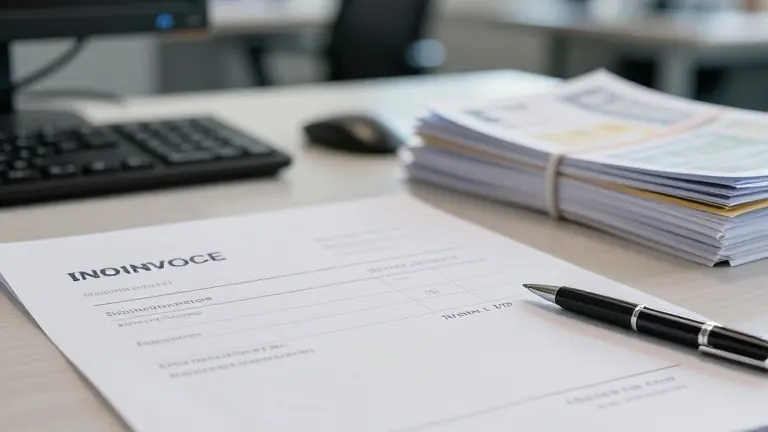
The Better Business Bureau Serving Central Indiana has observed a growing number of fake invoice scams affecting local companies. The fraud typically reaches victims through mail or email, presenting bills for goods or services that the recipient did not request. While the scheme primarily targets organizations, the bureau notes that any individual can be deceived by these phony documents.
Trinity Rairdon, a spokesperson for the BBB Serving Central Indiana, explained that the invoices often mimic items a business would normally order, though some requests are unexpected. Rairdon stated, “It’s just asking for a payment. Typically, it’s an invoice that shows up for something that maybe your business would typically order, or it might be something remarkably out of the blue.” The bureau’s Scam Tracker has logged reports of fake bills for office supplies, domain hosting, and web services.
Recent reports illustrate the methods used by scammers. One victim described receiving an email claiming their computer protection had been updated. The message stated a bill of $310.37 had been issued and instructed the recipient to call for a refund if the charge was incorrect. The victim noted the syntax and address appeared suspicious. After calling and hanging up, the scammers called back, but the victim did not answer.
Another company received a physical mailer addressed to Accounts Payable. The envelope contained an invoice for an “annual renewal” from a fraudulent company posing as the website domain holder. A staff member told the BBB Scam Tracker that the fine print was minimal. Because the company already knew which provider handled their domain, they identified the invoice as fake immediately.
Rairdon advised businesses to train personnel on billing processes to identify red flags. She recommended that staff know exactly who they are paying and how those payments are typically processed. “The red flags typically it’s a vendor you do not recognize, and so I always advise businesses to make sure their personnel is trained with the billing process,” Rairdon said. “Who are you doing business with? Who are you paying consistently? How does that payment process? What does it look like?”
The bureau suggests several steps to prevent these losses. Companies should encourage open communication so employees feel comfortable raising concerns about specific invoices. Management should understand how legitimate invoices are delivered, including the timing, method, and payment procedures. Staff should not feel intimidated by threats of legal action or overdue payments, even if scammers impersonate government agencies.
Finally, businesses should create a formal procedure for inspecting incoming invoices. A small group of employees should handle bill pay and shipment receipts. This group must verify that ordered products or services were actually delivered before processing any payment. Training staff on these inspection procedures helps ensure that employees double-check all incoming invoices against known vendors.
Source: WISH-TV · original report published
More Business · Indianapolis news · Business Complaints · Report a business · Got a Story?