Democrats Control Both House and Senate After Midterm Sweep
Voters in Central Indiana and across the nation rejected the president's party, electing a new majority that promises deep oversight of the Trump administration.
By Paul Davidson ·
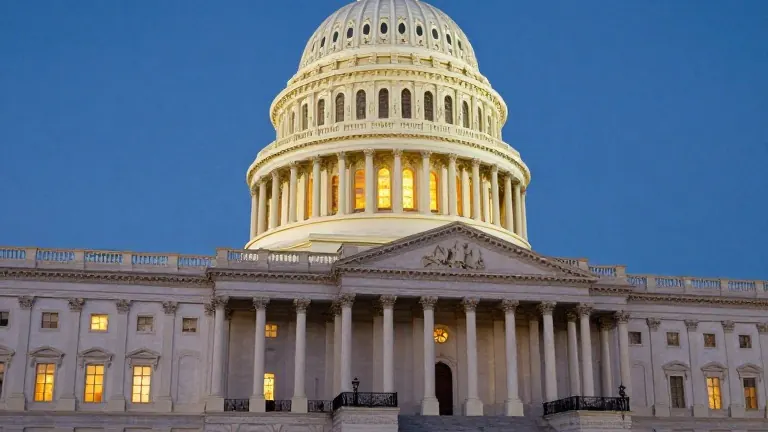
Democratic voters in Central Indiana and across the United States delivered a decisive mandate on Tuesday, November 3, by flipping control of both chambers of Congress. The midterm election results ended a period of Republican dominance in Washington and shifted the balance of power to the Democratic Party for the remainder of President Donald Trump’s term. This outcome forces a new dynamic in federal governance, where the White House must now negotiate with a Congress led by its political opponents.
The primary driver for this shift was widespread voter dissatisfaction with the direction of the country. According to an Associated Press voter poll, three-quarters of voters described the economy as either poor or not so good. Approximately 80 percent of respondents stated that inflation caused financial hardship for their households. These economic concerns, combined with worries about government corruption, outweighed other issues such as immigration and the war in Iran for most voters.
Democrats secured victories in states that have historically voted for the Republican Party. In Texas, James Talarico won a Senate seat, the first Democratic statewide victory in the state in more than 30 years. In South Carolina, Annie Andrews defeated incumbent Senator Darline Graham. In Kansas, Adam Hamilton defeated Senator Roger Marshall to become the state’s first Democratic senator since 1932. These wins occurred despite President Trump campaigning heavily in these regions and endorsing several of the losing Republican candidates.
The new congressional leadership has already outlined an agenda centered on oversight and investigation. Democratic Senate Leader Chuck Schumer described the results as a generational remake of the Senate map. House Leader Hakeem Jeffries stated that the American people are calling for transformational change. Party leaders signaled they will scrutinize the Trump administration’s actions and investigate how the president’s family has been enriched during his tenure. Impeachment proceedings are not ruled out for the president or his cabinet members.
President Trump reacted to the defeat by shifting blame to his party’s candidates. Before polls closed on the West Coast, he posted on social media that he was not on the ballot. He vowed to veto legislation passed by the new Democratic majority. In a phone interview with Fox News, Trump said he did not view the election as a personal defeat, noting that voters simply did not like the candidates. He also stated he would accept the results, despite earlier warnings about noncitizen voting and lawsuits filed in Alaska and California.
In the House of Representatives, Democrats expanded their reach into deep red territory. New Democratic seats were added in Kentucky, Missouri, Nebraska, Ohio, and Utah. In Iowa, Democrats will represent three of the state’s congressional districts, a significant change from the previous all-Republican delegation. Multiple Democratic pickups also occurred in Iowa, Texas, Florida, and Pennsylvania. Republicans had invested tens of millions of dollars in these states to protect Trump’s wins, but the spending did not prevent the shift in power.
The election results also affected state leadership across the country. In Texas, Democrat Gina Hinojosa defeated Republican Governor Greg Abbott. In Ohio, Democrat Amy Acton defeated Vivek Ramaswamy. In Georgia, Keisha Lance Bottoms became the first Black female governor of any state. In Florida, Byron Donalds became the first Black Republican elected governor. These state-level outcomes further solidified the Democratic Party’s presence in regions that have favored the Republican Party for decades.
The new congressional majority faces immediate challenges in shaping its 100-day agenda. Jeffries plans to focus on lowering the cost of living and aggressively overseeing the executive branch. Senate Majority Leader John Thune of the Republican Party stated that his party would work with Trump to stop what he called the worst impulses of Democrat extremism. The political landscape in Washington has changed fundamentally, setting the stage for a period of intense legislative conflict between the White House and Capitol Hill.
Source: WISH-TV · original report published
More Politics · Indianapolis news · Report a business · Got a Story?